Introduction
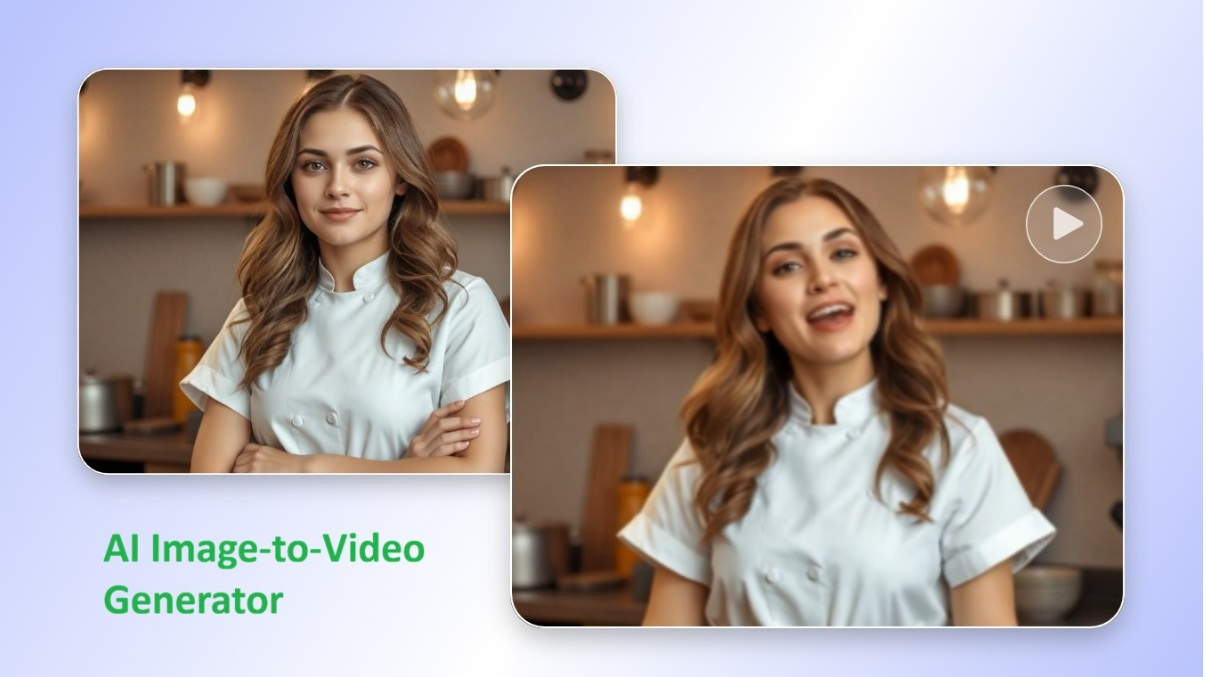
Two weeks of practical experimentation, benchmarking image-to-video quality, and stress testing workflow conclusively reveal one thing: in 2026, AI image-to-video generators will no longer be an experimental toy.
They are useful production instruments. They are now being used by creators, marketers, and startup teams to deliver explainer videos, social ads, product demos, and even cinematic shorts faster than it was possible only a year ago.
The answer to this question is simple; what tools are worth your time today? The practical, decision-oriented list of the best AI image-to-video generator tools of 2026 is below, beginning with the strongest overall one that I have tested.
Best AI Image-to-Video Tools at a Glance
| Tool | Primary Use Case | Modalities | Platforms | Free Plan |
| Magic Hour | Image-to-video, lip-sync, avatars | Image, video, audio | Web | Limited |
| Runway | Creative video generation | Image, text, video | Web | Yes |
| Pika Labs | Short-form social video | Image, text | Web, Discord | Yes |
| Luma Dream Machine | Cinematic motion | Image, text | Web | Limited |
| Kaiber | Music and art videos | Image, audio | Web | No |
| Synthesia | Talking head videos | Image, text, audio | Web | Trial |
| HeyGen | Marketing videos | Image, text, audio | Web | Trial |
| Stable Video Diffusion | Open-source workflows | Image, video | Local | Yes |
| Genmo | Experimental motion | Image, text | Web | Limited |
| PixVerse | Fast social clips | Image, text | Web | Yes |
1. Magic Hour — Best Overall Image-to-Video Generator
Magic Hour takes the lead due to its middle ground control, realism and the production readiness compared to any of its competitors that I have tried. It is not merely a dazzling demo producer, but it is aimed at individuals who have deliveries to make on deadlines. Specifically, its AI image to video generator generates coherent movement, reliable facial expressions and smooth transitions even when using a single still picture.
Pros
- Excellent motion stability from static images
- Best-in-class lip-sync accuracy
- Clean UI designed for fast iteration
- Strong avatar and talking-head workflows
Cons
- Free tier is restrictive
- Advanced controls require learning curve
This is very difficult to gain an edge on in case of any marketing, education, or product storytelling you need. More than 300 advanced workflows are also supported by Magic Hour including face swap video online, which I considered to be helpful with the localized campaigns and the creative variations of the A/B tests that do not require reshoots.
Pricing: Free, Creator: it’s $15/mo for monthly and $10/mo for annual, Pro: $49/month.
2. Runway — Best for Creative Experimentation
Runway continues to be popular among designers and movie makers who desire the greatest degree of creative freedom. Its picture-to-video apparatus excel in case the objective is an abstract movement, artistic effects, or surreal transition effects.
Pros
- Powerful creative controls
- Strong text and image conditioning
- Active development and updates
Cons
- Less predictable realism
- Can require multiple generations
Runway is a good sandbox if you are doing experimentation around visual language or concept work.
Pricing: Free plan available; usage-based paid tiers.
3. Pika Labs — Best for Social Content
Pika Labs is concerned with accessibility and speed. It is also optimized on short form vertical videos and this has made it a favorite among social media teams.
Pros
- Fast generation times
- Beginner-friendly prompts
- Strong community examples
Cons
- Limited fine-grained control
- Inconsistent facial motion
It can provide the results with minimal friction in case of quick social clips.
Pricing: Free plan with limits; paid upgrades available.
4. Luma Dream Machine — Best Cinematic Motion
The Dream machine by Luma struck me by camera depth and movement. It is good in sweeps and movement in the cinema and in the environment.
Pros
- Natural camera motion
- High visual fidelity
- Strong scene coherence
Cons
- Slower generation
- Limited character control
In case visual polish is more important than speed, it is a good choice.
Pricing: Limited free usage; paid plans scale with output.
5. Kaiber — Best for Music-Driven Videos
Kaiber is geared to musicians and graphic artists who require rhythmical motion related to sound.
Pros
- Audio-reactive visuals
- Stylized aesthetics
- Simple workflow
Cons
- Less realistic motion
- Narrow use cases
Best on music videos and branded art work.
Pricing: Paid plans only.
How We Chose These Tools
I rated all platforms on the same categories: motion stability, face consistency, prompt control, export quality, speed and general usability. Each tool was worked out using the same source images and prompts. I have also taken into consideration the pricing transparency and the appropriateness of each tool to the actual production working processes rather than demos.
Market Landscape and Trends
The market of 2026 is on the move to controllability and reliability. Newest innovation is being replaced by production quality such as lip-sync, brand consistency and API. Anticipate closer collaboration with editing suites and increased ethical protection on identity usage.
Final Takeaway
Magic Hour is the obvious choice in case you require the most efficient all-in-one solution. Runway and Luma are creatively brilliant, whereas Pika and Kaiber also support the speedy moving social and music workflow. My suggestion: you should test two or three tools with your real assets first. At least one of them will serve your purposes, I assure.
FAQ
1. In 2026, which AI image-to-video generator is the best? Magic Hour has the optimal combination of quality, control and reliability.
2. Are free plans sufficient for professionals? For testing, yes. Paid plans are typically needed in order to be produced.
3. Do these tools have the ability to substitute video editors? They support editors but do not substitute them.
4. What is the most appropriate tool in social media? The speed and format are optimized in Pika Labs and PixVerse.
5. Is it that realism or that creativity is getting better? In 2026, realism is advancing more particularly in the areas of facial motion and lip-sync.